
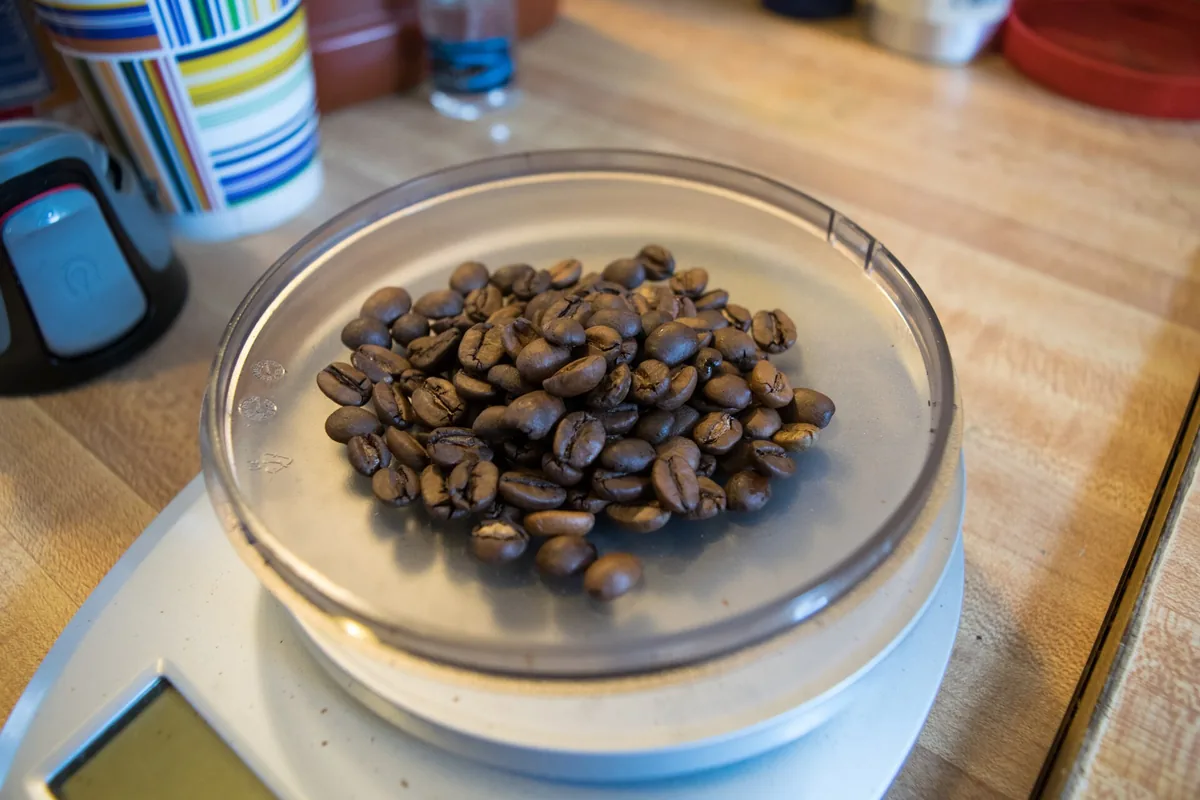
The pour-over coffee ratio is the weight of coffee compared to the weight of water, and it is the single most useful number in brewing. A ratio of 1:16 means one gram of coffee for every 16 grams of water. Change the ratio and you change the strength of the cup more reliably than any other adjustment — more reliably than the grind, the temperature, or the pour. If your coffee tastes wrong, the ratio is the first thing to check, and the cheapest thing to fix, because it costs nothing to change.
The ratio chart: start at 1:16
Start at 1:16. It is the standard starting point that the Specialty Coffee Association’s brewing guidelines sit inside, and it produces a balanced cup for most beans and most brewers. Here is the chart for the batch sizes you will actually brew.
One mug (250 ml): 15 grams of coffee to 250 grams of water. This is the most common home brew, and the one to learn first.
Two mugs (500 ml): 30 grams of coffee to 500 grams of water. This is a full Chemex 6-cup brew or two V60 brews.
Small mug (200 ml): 12 grams of coffee to 200 grams of water. Useful when you only want a small cup and do not want to waste beans.
Large pot (750 ml): 45 grams of coffee to 750 grams of water. This is a full Chemex 8-cup brew for three or four people.
Weigh both the coffee and the water. A gram is a gram, and water weighs one gram per millilitre, so a kitchen scale does both jobs. Scoops and tablespoons are not accurate enough — a tablespoon of light-roast beans weighs differently from a tablespoon of dark-roast beans, and a “scoop” varies by brand. The scale is the one piece of gear that makes every other variable repeatable, and it costs less than a bag of good beans.
1:15, 1:16, or 1:17: which one is right for you?
The three ratios around the standard each suit a different taste, and the right one depends on the beans and on what you like. 1:15 is the stronger ratio: 15 grams of coffee to 225 grams of water for one mug. Use it if your coffee tastes thin, watery, or tea-like, or if you brew light roasts, which are denser and harder to extract. 1:15 is also the right choice if you add milk, because the extra coffee keeps the flavour present after the milk dilutes it.
1:16 is the balanced ratio and the one to start with. Use it for medium roasts, for a new bag of beans you have not brewed before, and for any brewer you are still learning. It is the ratio that the most recipes are built around, so it is also the ratio that makes other people’s advice — grind settings, pour schedules, brew times — work as written.
1:17 is the lighter ratio: 15 grams of coffee to 255 grams of water for one mug. Use it if your coffee tastes heavy, muddy, or harsh, or if you brew dark roasts, which give up flavour easily and turn bitter when over-extracted. 1:17 is also the right choice if you like a tea-like, delicate cup and you brew a washed Ethiopian or a floral coffee where you want the brightness to show.
How to tell which way to adjust
Taste the cup and adjust in one direction at a time. If the coffee tastes sour, sharp, or salty, it is under-extracted — the water did not pull enough flavour out of the grounds. The fix is a stronger ratio: move from 1:16 to 1:15, or grind one click finer. If the coffee tastes bitter, dry, or astringent — the dry, mouth-puckering feeling at the back of your tongue — it is over-extracted. The fix is a weaker ratio: move from 1:16 to 1:17, or grind one click coarser.
The most common beginner mistake is confusing sourness and bitterness. Sourness is sharp and bright, like an unripe fruit; bitterness is dry and harsh, like over-steeped tea. Most beginners who say their coffee is “too bitter” are actually tasting sourness from under-extraction, and they make it worse by grinding coarser or using less coffee. If you are not sure which one you taste, try the stronger ratio first — move to 1:15 and brew again. If the cup improves, it was sourness. If it gets worse, it was bitterness, and you move the other way.
Ratio is not the same as strength, and strength is not the same as extraction
Two ideas get confused here, and sorting them out makes every recipe easier to follow. Strength is how much coffee is dissolved in the water — it is set by the ratio, and it is what you taste as “strong” or “weak.” Extraction is how much flavour the water pulled out of each ground — it is set by the grind, the temperature, and the contact time, and it is what you taste as “sour” or “bitter.”
You can have a strong cup that is under-extracted (too much coffee, ground too coarse — strong and sour) and a weak cup that is over-extracted (too little coffee, ground too fine — weak and bitter). The ratio sets the strength; the grind sets the extraction. When a cup tastes wrong, decide first whether the problem is strength or extraction, then change only the variable that controls it. Change the ratio for strength problems. Change the grind for extraction problems. Never change both on the same morning, or you will not know which one fixed it.
Keep a notebook for a week
Write down three numbers every morning for a week: the ratio, the grind setting, and the total brew time. Taste the cup and write one word next to it — sour, bitter, balanced, thin, heavy. After a week you will see the pattern, and you will know your own recipe instead of guessing. The ratio is the first number in that notebook, and it is the one that makes all the others meaningful.